AAR — Accelerated address resolver
Accelerated address resolver is a cryptographic support function for implementing the "Resolvable Private Address Resolution Procedure" described in the Bluetooth Core specification v4.0. "Resolvable private address generation" should be achieved using ECB and is not supported by AAR.
The procedure allows two devices that share a secret key to generate and resolve a hash based on their device address. The AAR block enables real-time address resolution on incoming packets when configured as described in this chapter. This allows real-time packet filtering (whitelisting) using a list of known shared keys (Identity Resolving Keys (IRK) in Bluetooth).
Shared resources
The AAR shares registers and other resources with the peripherals that have the same ID as the AAR. The user must therefore disable all peripherals that have the same ID as the AAR before the AAR can be configured and used.
Disabling a peripheral that have the same ID as the AAR will not reset any of the registers that are shared with the AAR. It is therefore important to configure all relevant AAR registers explicitly to secure that it operates correctly.
See the Instantiation table in Instantiation for details on peripherals and their IDs.
EasyDMA
The AAR implements EasyDMA for reading and writing to the RAM. The EasyDMA will have finished accessing the RAM when the END, RESOLVED, and NOTRESOLVED events are generated.
If the IRKPTR, ADDRPTR and the SCRATCHPTR is not pointing to the Data RAM region, an EasyDMA transfer may result in a HardFault or RAM corruption. See Memory for more information about the different memory regions.
Resolving a resolvable address
As per Bluetooth specification, a private resolvable address is composed of six bytes.

To resolve an address the ADDRPTR register must point to the start of packet. The resolver is started by triggering the START task. A RESOLVED event is generated when the AAR manages to resolve the address using one of the Identity Resolving Keys (IRK) found in the IRK data structure. The AAR will use the IRK specified in the register IRK0 to IRK15 starting from IRK0. How many to be used is specified by the NIRK register. The AAR module will generate a NOTRESOLVED event if it is not able to resolve the address using the specified list of IRKs.
The AAR will go through the list of available IRKs in the IRK data structure and for each IRK try to resolve the address according to the Resolvable Private Address Resolution Procedure described in the Bluetooth Specification1. The time it takes to resolve an address may vary depending on where in the list the resolvable address is located. The resolution time will also be affected by RAM accesses performed by other peripherals and the CPU. See the Electrical specifications for more information about resolution time.
The AAR will only do a comparison of the received address to those programmed in the module. And not check what type of address it actually is.
The AAR will stop as soon as it has managed to resolve the address, or after trying to resolve the address using NIRK number of IRKs from the IRK data structure. The AAR will generate an END event after it has stopped.
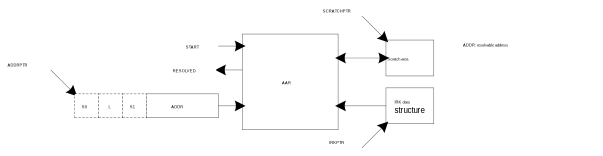
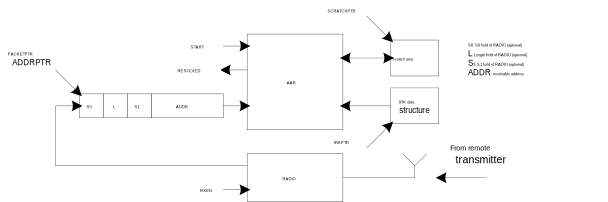
Use case example for chaining RADIO packet reception with address resolution using AAR
The AAR may be started as soon as the 6 bytes required by the AAR have been received by the RADIO and stored in RAM. The ADDRPTR pointer must point to the start of packet.
IRK data structure
The IRK data structure is located in RAM at the memory location specified by the CNFPTR pointer register.
|
Registers
| Base address | Peripheral | Instance | Description | Configuration | |
|---|---|---|---|---|---|
| 0x4000F000 | AAR | AAR | Acelerated Address Resolver | ||
| Register | Offset | Description | |
|---|---|---|---|
| TASKS_START | 0x000 | Start resolving addresses based on IRKs specified in the IRK data structure | |
| TASKS_STOP | 0x008 | Stop resolving addresses | |
| EVENTS_END | 0x100 | Address resolution procedure complete | |
| EVENTS_RESOLVED | 0x104 | Address resolved | |
| EVENTS_NOTRESOLVED | 0x108 | Address not resolved | |
| INTENSET | 0x304 | Enable interrupt | |
| INTENCLR | 0x308 | Disable interrupt | |
| STATUS | 0x400 | Resolution status | |
| ENABLE | 0x500 | Enable AAR | |
| NIRK | 0x504 | Number of IRKs | |
| IRKPTR | 0x508 | Pointer to IRK data structure | |
| ADDRPTR | 0x510 | Pointer to the resolvable address | |
| SCRATCHPTR | 0x514 | Pointer to data area used for temporary storage | |
INTENSET
Address offset: 0x304
Enable interrupt
| Bit number | 31 | 30 | 29 | 28 | 27 | 26 | 25 | 24 | 23 | 22 | 21 | 20 | 19 | 18 | 17 | 16 | 15 | 14 | 13 | 12 | 11 | 10 | 9 | 8 | 7 | 6 | 5 | 4 | 3 | 2 | 1 | 0 | |||
|---|---|---|---|---|---|---|---|---|---|---|---|---|---|---|---|---|---|---|---|---|---|---|---|---|---|---|---|---|---|---|---|---|---|---|---|
| Id | C | B | A | ||||||||||||||||||||||||||||||||
| Reset 0x00000000 | 0 | 0 | 0 | 0 | 0 | 0 | 0 | 0 | 0 | 0 | 0 | 0 | 0 | 0 | 0 | 0 | 0 | 0 | 0 | 0 | 0 | 0 | 0 | 0 | 0 | 0 | 0 | 0 | 0 | 0 | 0 | 0 | |||
| Id | RW | Field | Value Id | Value | Description | ||||||||||||||||||||||||||||||
| A | RW | END | Write '1' to Enable interrupt for END event See EVENTS_END | ||||||||||||||||||||||||||||||||
| Set | 1 | Enable | |||||||||||||||||||||||||||||||||
| Disabled | 0 | Read: Disabled | |||||||||||||||||||||||||||||||||
| Enabled | 1 | Read: Enabled | |||||||||||||||||||||||||||||||||
| B | RW | RESOLVED | Write '1' to Enable interrupt for RESOLVED event See EVENTS_RESOLVED | ||||||||||||||||||||||||||||||||
| Set | 1 | Enable | |||||||||||||||||||||||||||||||||
| Disabled | 0 | Read: Disabled | |||||||||||||||||||||||||||||||||
| Enabled | 1 | Read: Enabled | |||||||||||||||||||||||||||||||||
| C | RW | NOTRESOLVED | Write '1' to Enable interrupt for NOTRESOLVED event | ||||||||||||||||||||||||||||||||
| Set | 1 | Enable | |||||||||||||||||||||||||||||||||
| Disabled | 0 | Read: Disabled | |||||||||||||||||||||||||||||||||
| Enabled | 1 | Read: Enabled | |||||||||||||||||||||||||||||||||
INTENCLR
Address offset: 0x308
Disable interrupt
| Bit number | 31 | 30 | 29 | 28 | 27 | 26 | 25 | 24 | 23 | 22 | 21 | 20 | 19 | 18 | 17 | 16 | 15 | 14 | 13 | 12 | 11 | 10 | 9 | 8 | 7 | 6 | 5 | 4 | 3 | 2 | 1 | 0 | |||
|---|---|---|---|---|---|---|---|---|---|---|---|---|---|---|---|---|---|---|---|---|---|---|---|---|---|---|---|---|---|---|---|---|---|---|---|
| Id | C | B | A | ||||||||||||||||||||||||||||||||
| Reset 0x00000000 | 0 | 0 | 0 | 0 | 0 | 0 | 0 | 0 | 0 | 0 | 0 | 0 | 0 | 0 | 0 | 0 | 0 | 0 | 0 | 0 | 0 | 0 | 0 | 0 | 0 | 0 | 0 | 0 | 0 | 0 | 0 | 0 | |||
| Id | RW | Field | Value Id | Value | Description | ||||||||||||||||||||||||||||||
| A | RW | END | Write '1' to Disable interrupt for END event See EVENTS_END | ||||||||||||||||||||||||||||||||
| Clear | 1 | Disable | |||||||||||||||||||||||||||||||||
| Disabled | 0 | Read: Disabled | |||||||||||||||||||||||||||||||||
| Enabled | 1 | Read: Enabled | |||||||||||||||||||||||||||||||||
| B | RW | RESOLVED | Write '1' to Disable interrupt for RESOLVED event See EVENTS_RESOLVED | ||||||||||||||||||||||||||||||||
| Clear | 1 | Disable | |||||||||||||||||||||||||||||||||
| Disabled | 0 | Read: Disabled | |||||||||||||||||||||||||||||||||
| Enabled | 1 | Read: Enabled | |||||||||||||||||||||||||||||||||
| C | RW | NOTRESOLVED | Write '1' to Disable interrupt for NOTRESOLVED event | ||||||||||||||||||||||||||||||||
| Clear | 1 | Disable | |||||||||||||||||||||||||||||||||
| Disabled | 0 | Read: Disabled | |||||||||||||||||||||||||||||||||
| Enabled | 1 | Read: Enabled | |||||||||||||||||||||||||||||||||
STATUS
Address offset: 0x400
Resolution status
| Bit number | 31 | 30 | 29 | 28 | 27 | 26 | 25 | 24 | 23 | 22 | 21 | 20 | 19 | 18 | 17 | 16 | 15 | 14 | 13 | 12 | 11 | 10 | 9 | 8 | 7 | 6 | 5 | 4 | 3 | 2 | 1 | 0 | |||
|---|---|---|---|---|---|---|---|---|---|---|---|---|---|---|---|---|---|---|---|---|---|---|---|---|---|---|---|---|---|---|---|---|---|---|---|
| Id | A | A | A | A | |||||||||||||||||||||||||||||||
| Reset 0x00000000 | 0 | 0 | 0 | 0 | 0 | 0 | 0 | 0 | 0 | 0 | 0 | 0 | 0 | 0 | 0 | 0 | 0 | 0 | 0 | 0 | 0 | 0 | 0 | 0 | 0 | 0 | 0 | 0 | 0 | 0 | 0 | 0 | |||
| Id | RW | Field | Value Id | Value | Description | ||||||||||||||||||||||||||||||
| A | R | STATUS | [0..15] | The IRK that was used last time an address was resolved | |||||||||||||||||||||||||||||||
ENABLE
Address offset: 0x500
Enable AAR
| Bit number | 31 | 30 | 29 | 28 | 27 | 26 | 25 | 24 | 23 | 22 | 21 | 20 | 19 | 18 | 17 | 16 | 15 | 14 | 13 | 12 | 11 | 10 | 9 | 8 | 7 | 6 | 5 | 4 | 3 | 2 | 1 | 0 | |||
|---|---|---|---|---|---|---|---|---|---|---|---|---|---|---|---|---|---|---|---|---|---|---|---|---|---|---|---|---|---|---|---|---|---|---|---|
| Id | A | A | |||||||||||||||||||||||||||||||||
| Reset 0x00000000 | 0 | 0 | 0 | 0 | 0 | 0 | 0 | 0 | 0 | 0 | 0 | 0 | 0 | 0 | 0 | 0 | 0 | 0 | 0 | 0 | 0 | 0 | 0 | 0 | 0 | 0 | 0 | 0 | 0 | 0 | 0 | 0 | |||
| Id | RW | Field | Value Id | Value | Description | ||||||||||||||||||||||||||||||
| A | RW | ENABLE | Enable or disable AAR | ||||||||||||||||||||||||||||||||
| Disabled | 0 | Disable | |||||||||||||||||||||||||||||||||
| Enabled | 3 | Enable | |||||||||||||||||||||||||||||||||
NIRK
Address offset: 0x504
Number of IRKs
| Bit number | 31 | 30 | 29 | 28 | 27 | 26 | 25 | 24 | 23 | 22 | 21 | 20 | 19 | 18 | 17 | 16 | 15 | 14 | 13 | 12 | 11 | 10 | 9 | 8 | 7 | 6 | 5 | 4 | 3 | 2 | 1 | 0 | |||
|---|---|---|---|---|---|---|---|---|---|---|---|---|---|---|---|---|---|---|---|---|---|---|---|---|---|---|---|---|---|---|---|---|---|---|---|
| Id | A | A | A | A | A | ||||||||||||||||||||||||||||||
| Reset 0x00000001 | 0 | 0 | 0 | 0 | 0 | 0 | 0 | 0 | 0 | 0 | 0 | 0 | 0 | 0 | 0 | 0 | 0 | 0 | 0 | 0 | 0 | 0 | 0 | 0 | 0 | 0 | 0 | 0 | 0 | 0 | 0 | 1 | |||
| Id | RW | Field | Value Id | Value | Description | ||||||||||||||||||||||||||||||
| A | RW | NIRK | [1..16] | Number of Identity root keys available in the IRK data structure | |||||||||||||||||||||||||||||||
IRKPTR
Address offset: 0x508
Pointer to IRK data structure
| Bit number | 31 | 30 | 29 | 28 | 27 | 26 | 25 | 24 | 23 | 22 | 21 | 20 | 19 | 18 | 17 | 16 | 15 | 14 | 13 | 12 | 11 | 10 | 9 | 8 | 7 | 6 | 5 | 4 | 3 | 2 | 1 | 0 | |||
|---|---|---|---|---|---|---|---|---|---|---|---|---|---|---|---|---|---|---|---|---|---|---|---|---|---|---|---|---|---|---|---|---|---|---|---|
| Id | A | A | A | A | A | A | A | A | A | A | A | A | A | A | A | A | A | A | A | A | A | A | A | A | A | A | A | A | A | A | A | A | |||
| Reset 0x00000000 | 0 | 0 | 0 | 0 | 0 | 0 | 0 | 0 | 0 | 0 | 0 | 0 | 0 | 0 | 0 | 0 | 0 | 0 | 0 | 0 | 0 | 0 | 0 | 0 | 0 | 0 | 0 | 0 | 0 | 0 | 0 | 0 | |||
| Id | RW | Field | Value Id | Value | Description | ||||||||||||||||||||||||||||||
| A | RW | IRKPTR | Pointer to the IRK data structure | ||||||||||||||||||||||||||||||||
ADDRPTR
Address offset: 0x510
Pointer to the resolvable address
| Bit number | 31 | 30 | 29 | 28 | 27 | 26 | 25 | 24 | 23 | 22 | 21 | 20 | 19 | 18 | 17 | 16 | 15 | 14 | 13 | 12 | 11 | 10 | 9 | 8 | 7 | 6 | 5 | 4 | 3 | 2 | 1 | 0 | |||
|---|---|---|---|---|---|---|---|---|---|---|---|---|---|---|---|---|---|---|---|---|---|---|---|---|---|---|---|---|---|---|---|---|---|---|---|
| Id | A | A | A | A | A | A | A | A | A | A | A | A | A | A | A | A | A | A | A | A | A | A | A | A | A | A | A | A | A | A | A | A | |||
| Reset 0x00000000 | 0 | 0 | 0 | 0 | 0 | 0 | 0 | 0 | 0 | 0 | 0 | 0 | 0 | 0 | 0 | 0 | 0 | 0 | 0 | 0 | 0 | 0 | 0 | 0 | 0 | 0 | 0 | 0 | 0 | 0 | 0 | 0 | |||
| Id | RW | Field | Value Id | Value | Description | ||||||||||||||||||||||||||||||
| A | RW | ADDRPTR | Pointer to the resolvable address (6-bytes) | ||||||||||||||||||||||||||||||||
SCRATCHPTR
Address offset: 0x514
Pointer to data area used for temporary storage
| Bit number | 31 | 30 | 29 | 28 | 27 | 26 | 25 | 24 | 23 | 22 | 21 | 20 | 19 | 18 | 17 | 16 | 15 | 14 | 13 | 12 | 11 | 10 | 9 | 8 | 7 | 6 | 5 | 4 | 3 | 2 | 1 | 0 | |||
|---|---|---|---|---|---|---|---|---|---|---|---|---|---|---|---|---|---|---|---|---|---|---|---|---|---|---|---|---|---|---|---|---|---|---|---|
| Id | A | A | A | A | A | A | A | A | A | A | A | A | A | A | A | A | A | A | A | A | A | A | A | A | A | A | A | A | A | A | A | A | |||
| Reset 0x00000000 | 0 | 0 | 0 | 0 | 0 | 0 | 0 | 0 | 0 | 0 | 0 | 0 | 0 | 0 | 0 | 0 | 0 | 0 | 0 | 0 | 0 | 0 | 0 | 0 | 0 | 0 | 0 | 0 | 0 | 0 | 0 | 0 | |||
| Id | RW | Field | Value Id | Value | Description | ||||||||||||||||||||||||||||||
| A | RW | SCRATCHPTR | Pointer to a scratch data area used for temporary storage during resolution.A space of minimum 3 bytes must be reserved. | ||||||||||||||||||||||||||||||||
Electrical specification
AAR Electrical Specification
| Symbol | Description | Min. | Typ. | Max. | Units | ||||
|---|---|---|---|---|---|---|---|---|---|
| tAAR,8 | Time for address resolution of 8 IRKs | 48 | µs |